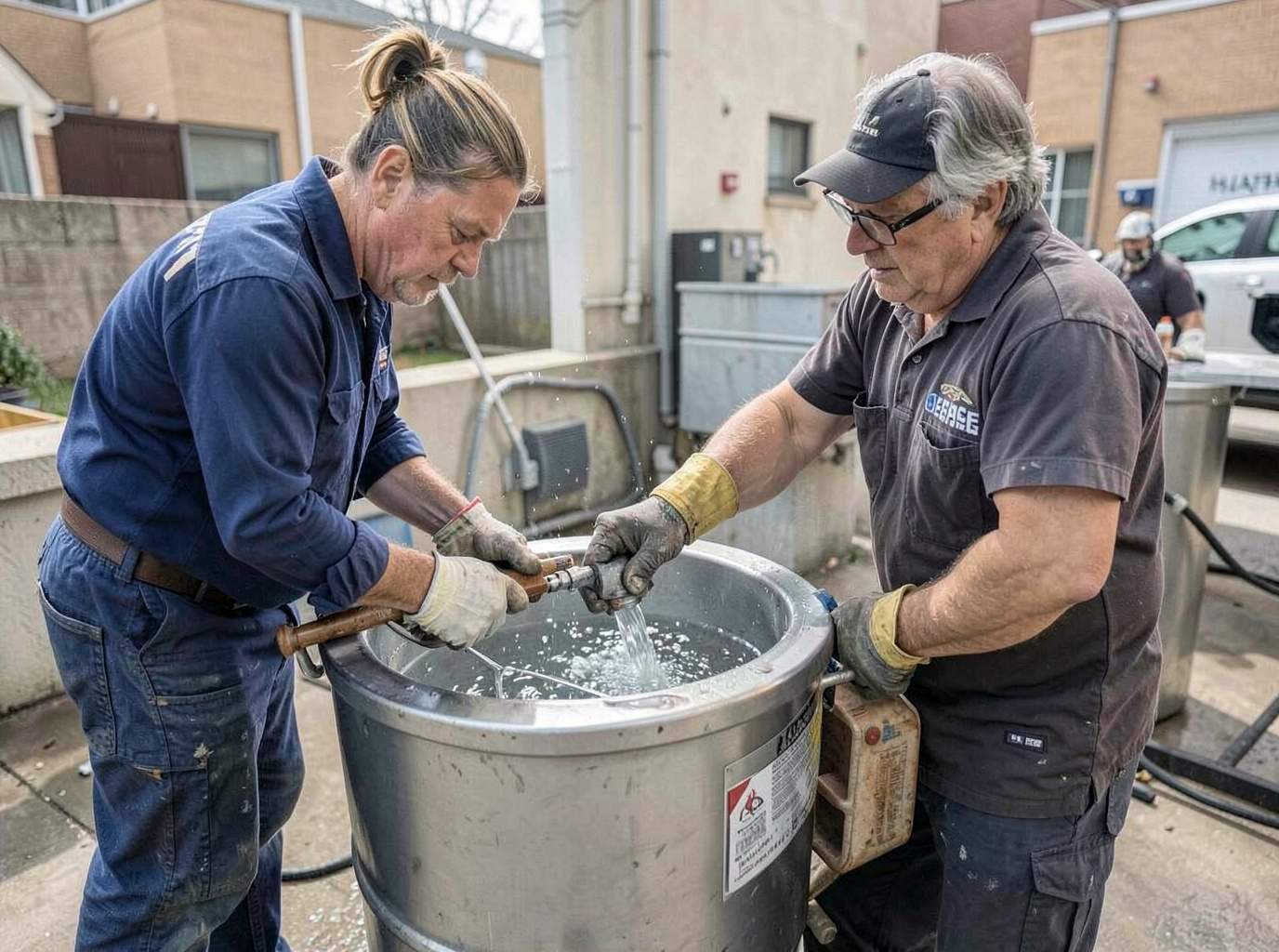
Dayton’s humid continental climate brings cold winters that cause grease to solidify faster in traps and lines, especially in older housing stock found in the Oregon District and South Park. Restaurants near the Dayton Art Institute and along University Row see heavy daily loads from frying and dishwashing, leading to rapid buildup that standard pumping misses. In Montgomery County, older cast-iron laterals common in pre-1960 homes narrow faster when fats congeal, requiring more than surface skimming to restore flow.
Commercial kitchens in Kettering and Beavercreek often operate under stricter health-department rules that mandate regular interceptor maintenance. Missing a scheduled cleaning can send grease into the main sewer, creating backups that affect multiple properties on the same block. We pull the entire trap contents, scrape walls, and check the outlet baffle so solids do not migrate downstream during the next heavy rain or snowmelt event.
Homeowners in South Park and Downtown Dayton sometimes discover their kitchen line ties into an aging grease trap installed when the house was converted from single-family to multi-unit use. These smaller residential units fill quicker than expected and lack the cleanouts newer installations require. Winter ground freeze can mask slow drainage until a sudden thaw creates an emergency call.
Technician insight
In Dayton, the thing that catches most people out with Grease Trap Cleaning is how fast grease sets up once winter temperatures drop below freezing; lines that drain fine in July back up by January because the trap was only skimmed instead of fully scraped and the outlet flushed.
Oregon District Restaurant Backup
A kitchen line serving a Downtown Dayton restaurant slowed during a cold snap. We found the interceptor nearly full with congealed grease that had hardened against the outlet baffle. After complete pumping and scraping, the line flowed freely again and the owner scheduled quarterly service before the next freeze.
Grease Trap Cleaning Services We Offer
✓Restaurant Grease Trap Pumping
Full removal of accumulated fats, oils, and solids from commercial interceptors serving kitchens in the Oregon District and near Carillon Historical Park.
✓Commercial Grease Interceptor Maintenance
Scheduled scraping, baffle inspection, and flow restoration for larger units in Dayton restaurants to meet local health requirements.
✓Residential Grease Trap Cleaning
Service for older single-family and converted homes in South Park and University Row where kitchen lines connect to small in-ground traps.
✓Kitchen Drain Line Jetting After Trap Service
High-pressure clearing of downstream lines once the trap is emptied to push any remaining grease toward the main before it hardens in cold weather.
✓Grease Trap Baffle and Outlet Inspection
Detailed check of internal components to confirm solids stay contained and do not enter Montgomery County sewer mains.
Grease Trap Cleaning Cost in OH
| Service | Typical Range | What Affects It |
|---|---|---|
| Residential Grease Trap Cleaning | $250–$450 | Small in-ground units common in South Park homes; price rises with difficult lid access or heavy sludge. |
| Restaurant Interceptor Pumping | $350–$700 | Standard 500–1,000 gallon units; frequency and added jetting increase cost. |
| Baffle Inspection And Repair | $150–$300 | Added when outlet baffle is damaged or missing during routine service. |
| Emergency After-Hours Service | $450–$850 | Calls outside Mon–Fri 8am–6pm or Sat 9am–2pm. |
Ranges are typical for OH and confirmed with an exact written quote before any work starts.
How it works
- 1
Site Assessment
Locate the trap, measure access, and note pipe condition before any pumping begins.
- 2
Content Removal
Pump all liquids and solids into sealed containers for proper disposal.
- 3
Interior Cleaning
Scrape walls, wash baffles, and flush the outlet to restore full capacity.
- 4
Final Flow Check
Run water through the unit and verify no restrictions remain before leaving the site.
Pricing
Most residential grease trap jobs in Dayton fall between $250 and $650 depending on size and access; commercial work varies by interceptor capacity and frequency.